
A small home office has to do two jobs: it should look like a place you want to sit and work like one.
That means good light, a comfortable chair, storage that hides clutter and a few details that make it yours.
Here are 31 ideas, from pink desks and floating corners to closets, nooks and built-ins, with the measurements that make them work.

Five Rules for a Small Office That Works
Start with the window. Put the desk where daylight falls on your work, not your screen.
Invest in the chair. You sit in it for hours, so comfort matters more than color.
Go vertical. Shelves and pegboards free the desk and the floor.
Limit your palette. Two colors plus wood keeps a tiny room calm.
Hide the cables. A basket or clip under the desk makes everything look tidy.
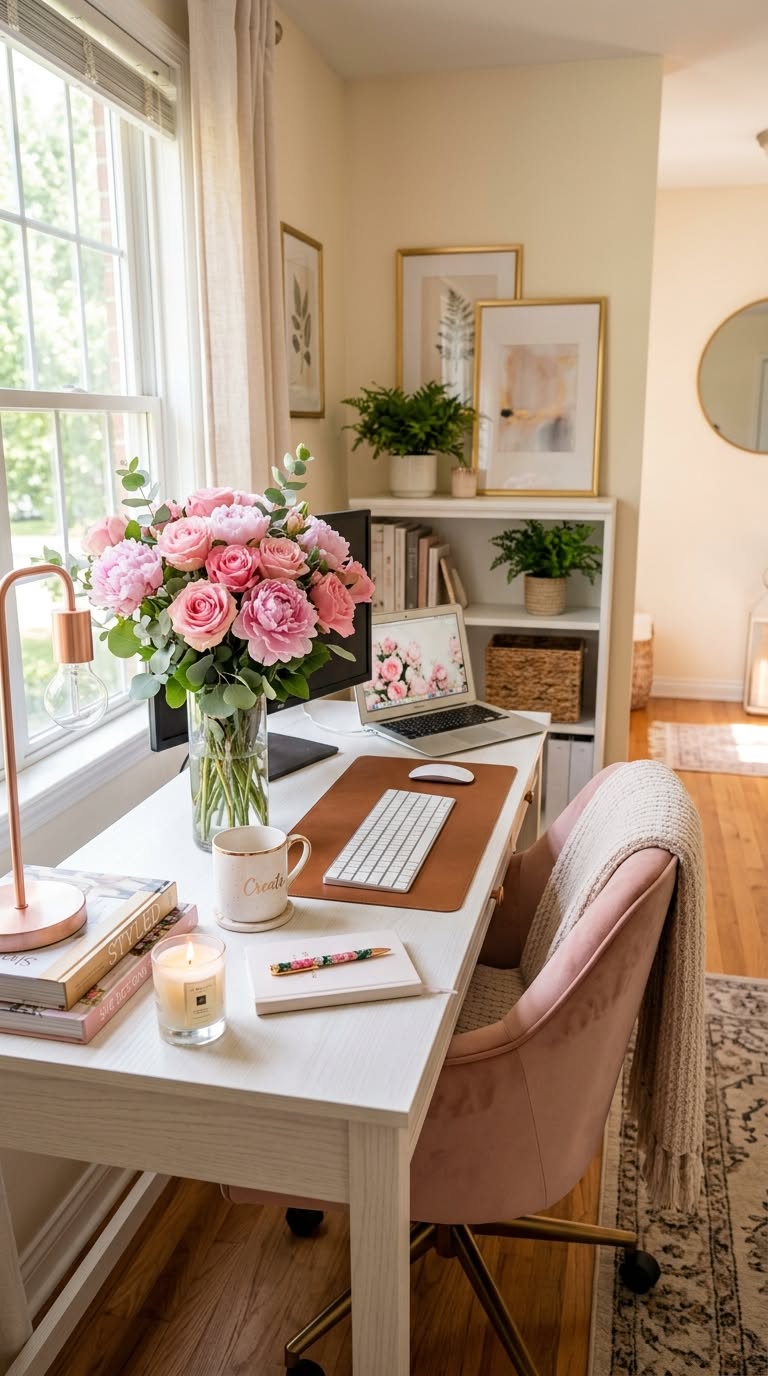
1. Face the Desk toward the Window
A desk by a window is worth more than any accessory.
A white desk here sits beside a window with a vase of pink peonies.
Natural light cuts eye strain and lifts your mood.
Change the vase water every two days and keep it away from the laptop.
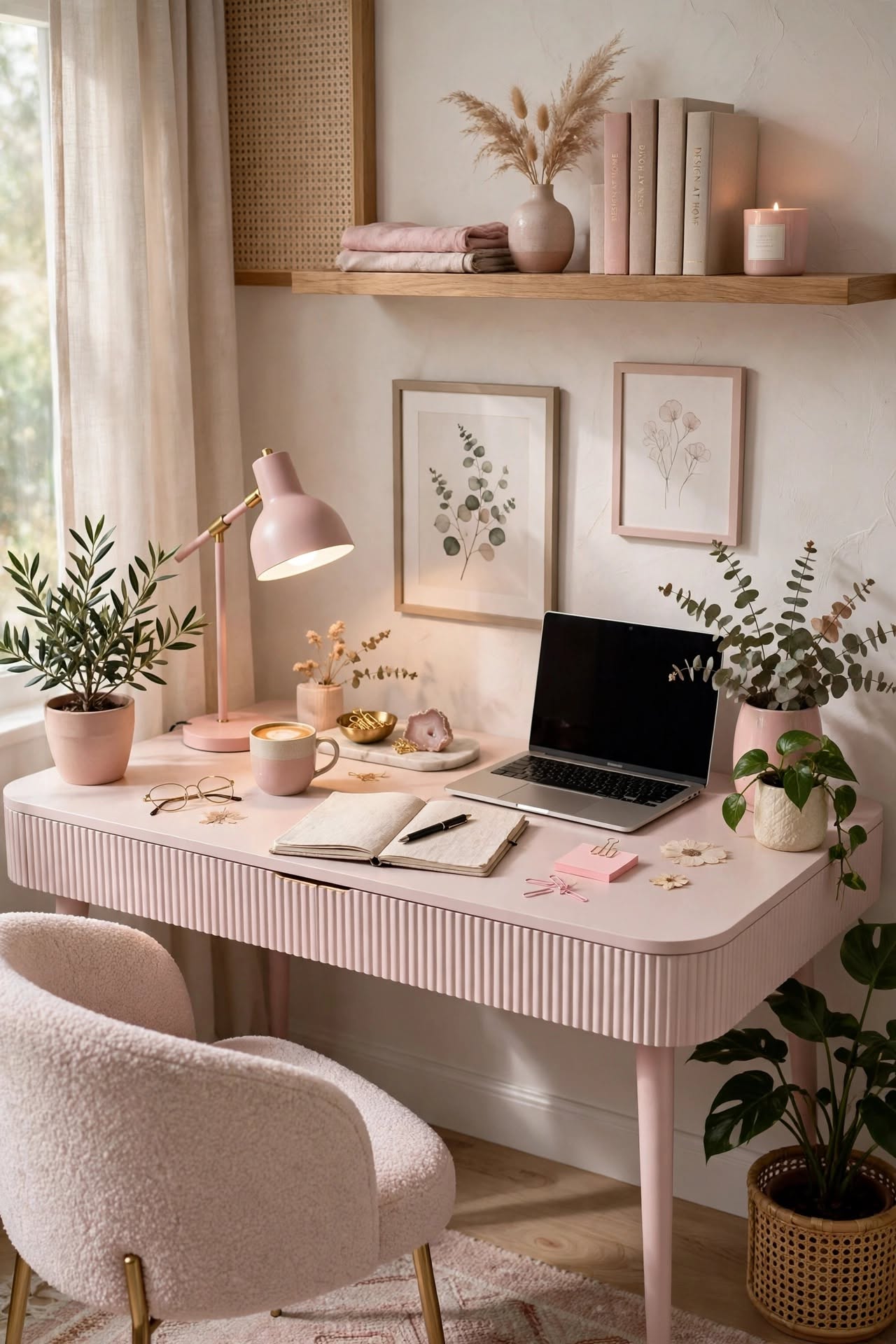
2. Keep Pink Pale and Textured
Pink works in an office when it stays soft. A blush desk, a boucle chair and a rose lamp make this corner calm and not sugary.
Choose dusty blush over bubblegum.
Repeat it only three times: desk, lamp and one accessory.
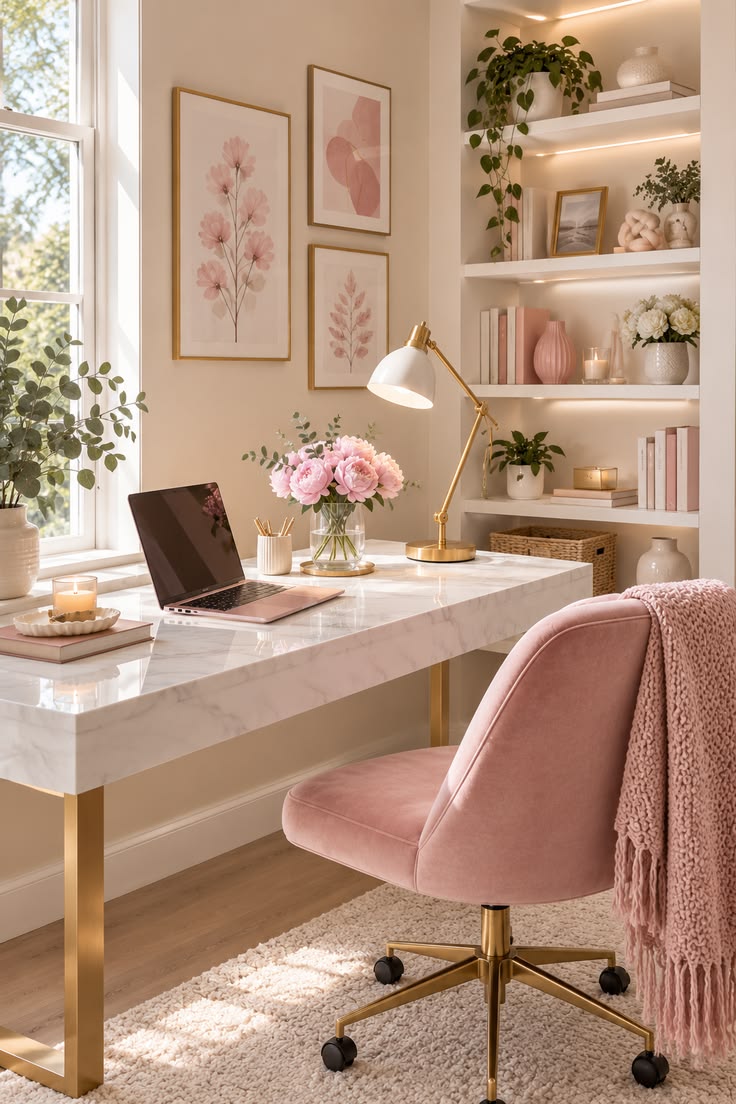
3. Get the Marble-and-Brass Look for Less
A marble-look top on brass-finish legs looks expensive and costs little.
This white marble desk has brass legs and a pink velvet chair.
- The shine bounces light around a small room.
- Add a knit throw over the chair back and the corner feels styled.
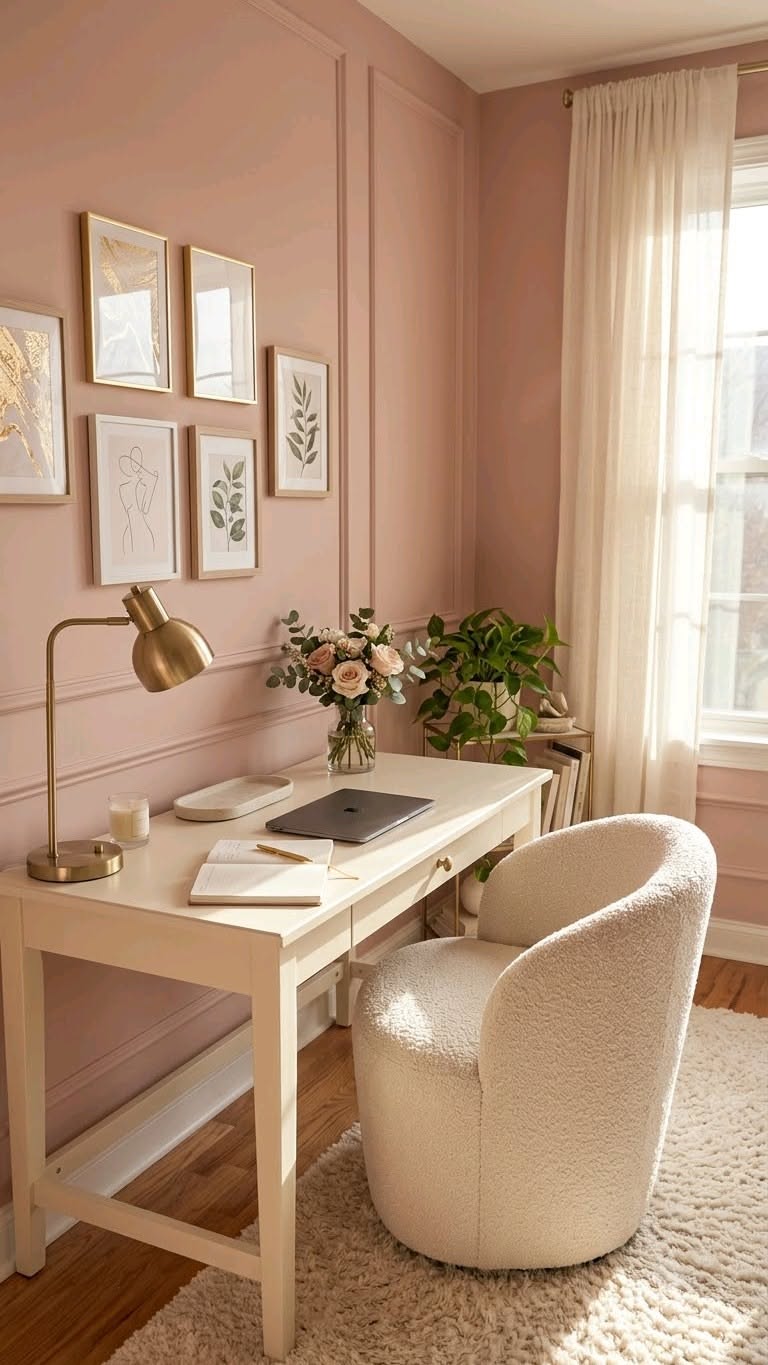
4. Paint Picture Frame Molding Pink
Paint does more than furniture.
A soft pink wall with wood molding squares sits behind this white desk and framed prints.
The treatment costs under $100 and makes a plain desk look built-in. Pick a warm pink with a gray undertone so it does not turn salmon, and test samples on two walls.
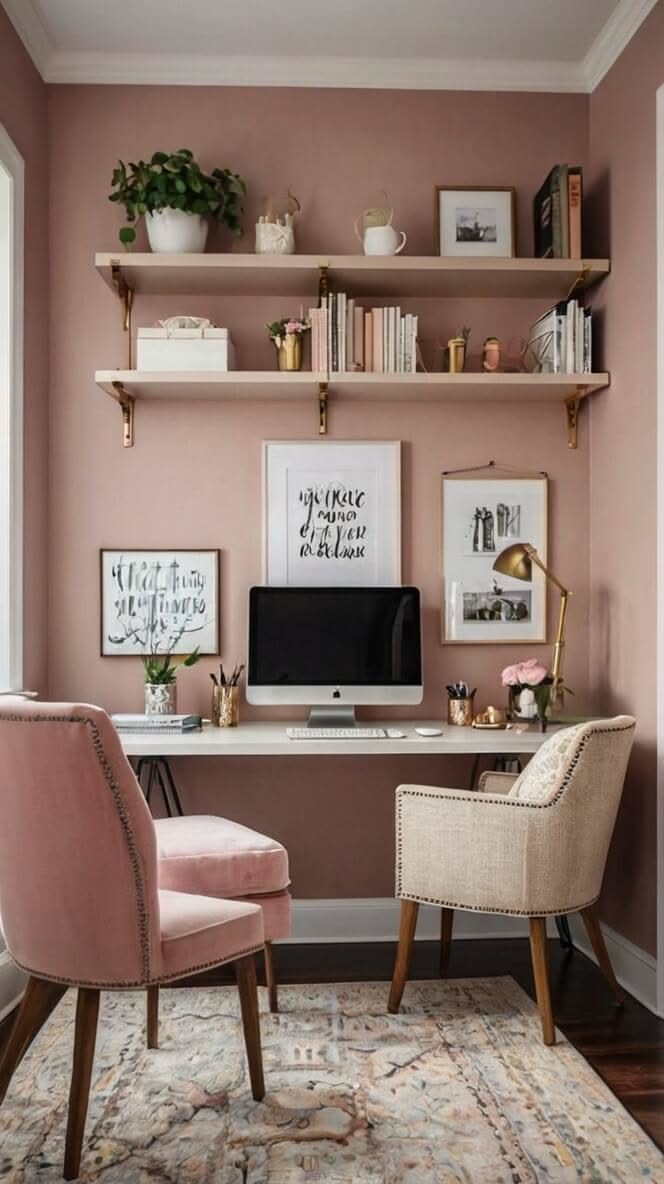
5. Add a Second Chair and Gallery Shelves
A second chair turns a work corner into a place for coffee with a client or a friend.
Two upholstered chairs and shelves of framed prints fill this pink wall.
Quick tip: Choose an armless chair that tucks under the desk.
Space two shelves about 14 inches apart so books and frames do not crowd the wall.
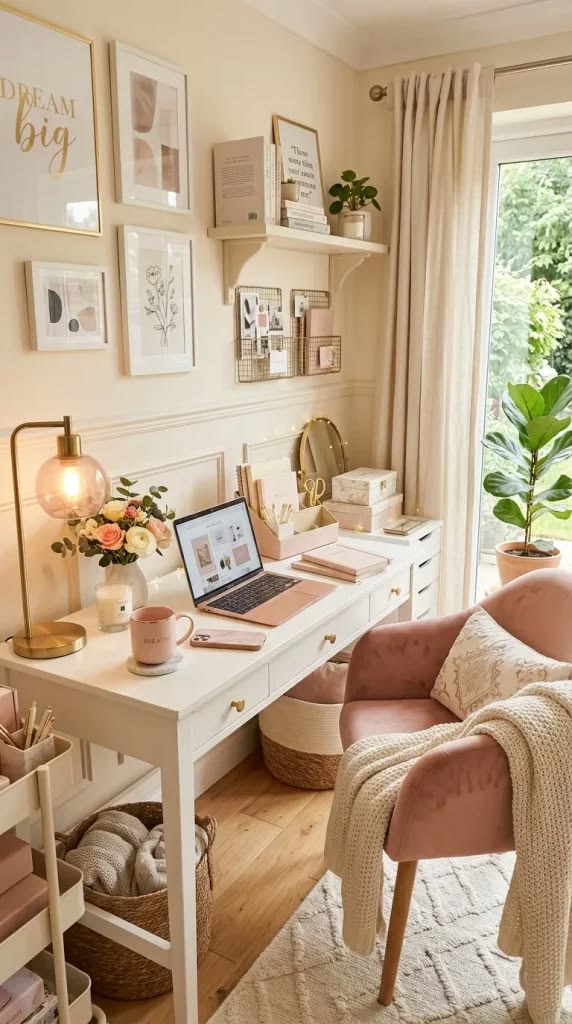
6. Hang Quiet Motivational Art
Motivational art works when it is quiet. Wall prints, a pink chair and a small cart surround this white desk.
Use one or two neutral prints with a single quote and let the rest be botanical or abstract.
A small rolling cart beside the desk keeps supplies at hand and rolls away when you finish.
7. Add LED Strips Under the Shelves
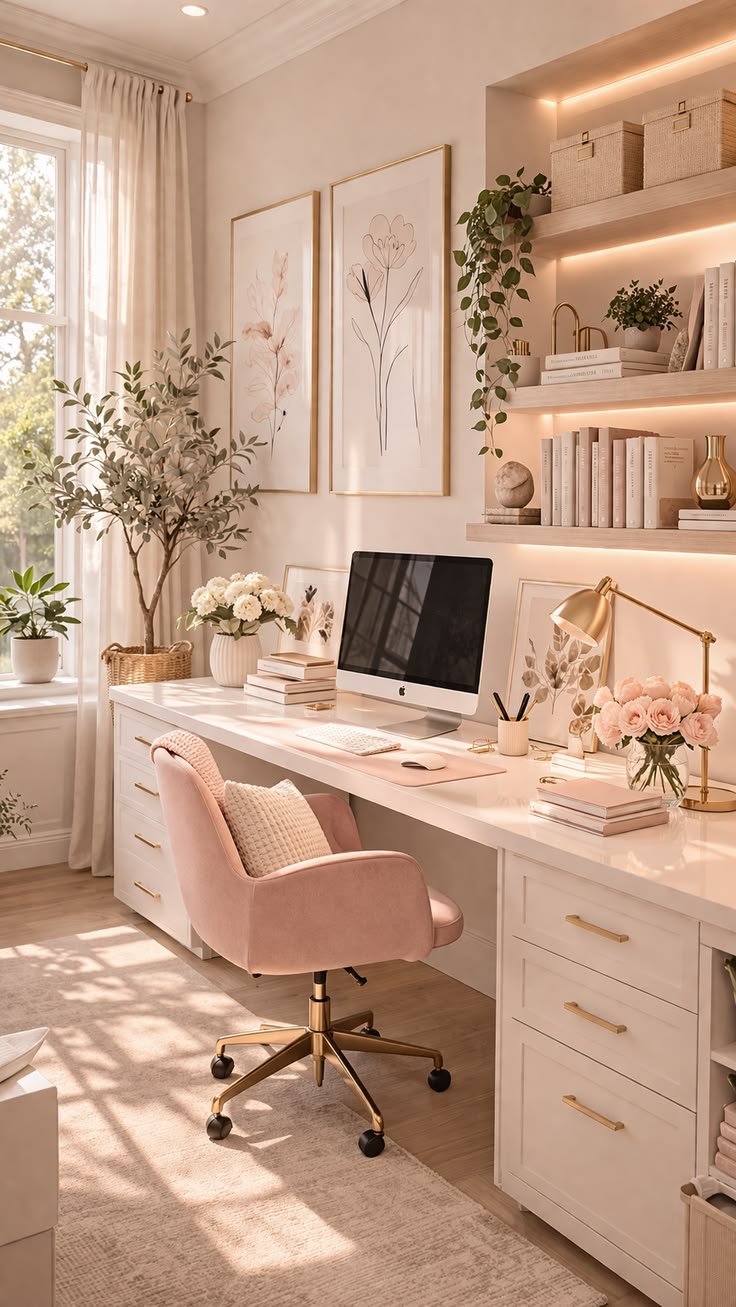
Under-shelf LED strips give a built-in look for about $20.
Lit shelves and a long white desk fill this pink-chair office. Choose warm white (2700K) and a plug-in strip with a dimmer.
Keep the desktop clear except for the monitor and a lamp.
8. Choose a Slim-Legged Writing Desk
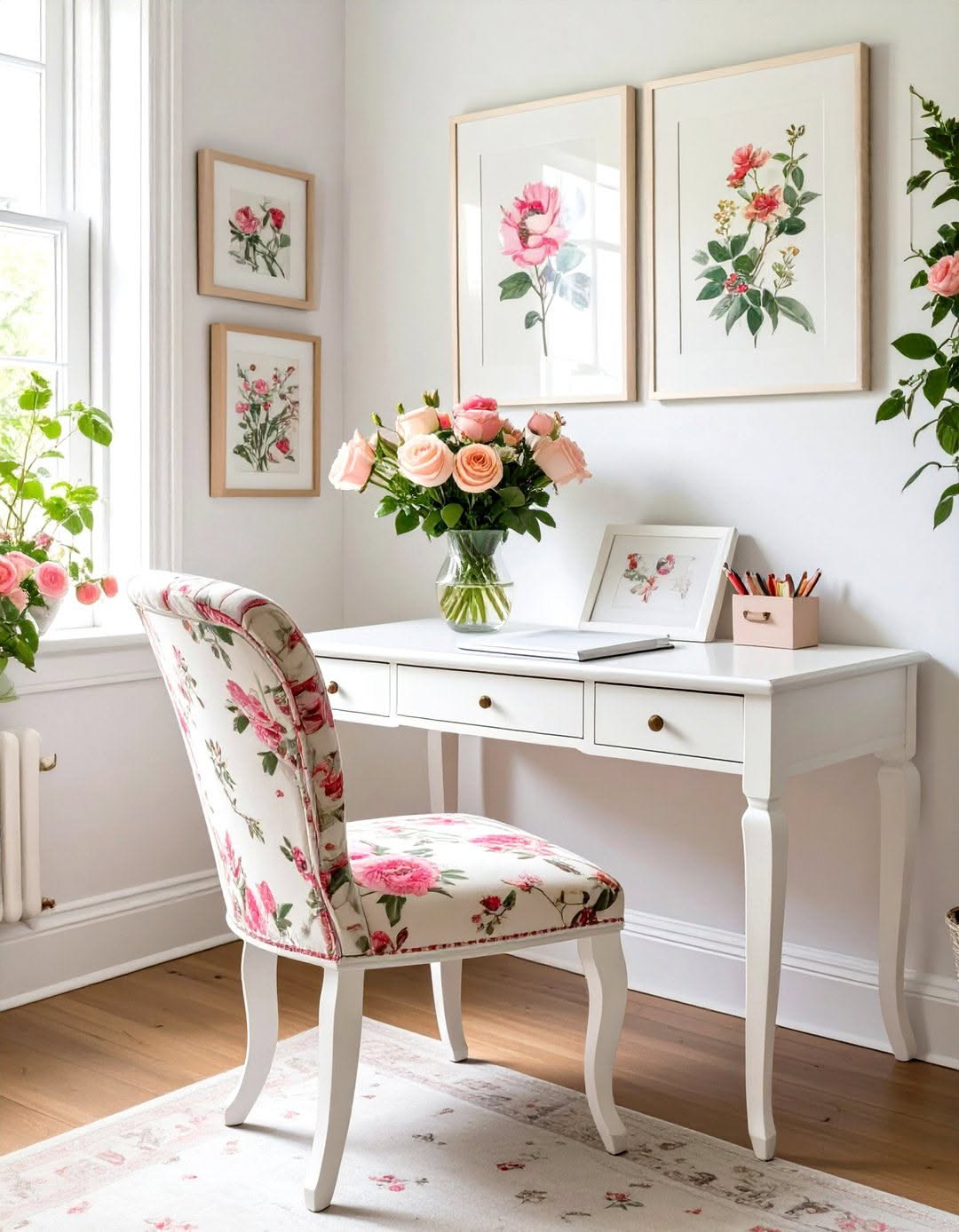
A writing desk with slim legs makes a room feel bigger.
A white vintage-style desk, floral chair and botanical prints share this room.
- You can see the floor underneath.
- Hang prints in matching frames 2 inches apart and cover the seat in a washable fabric.
9. Add Slatted Wood to a Pink Room
Wood slats add warmth to a pink room. A slatted wood panel and lit corner shelves dress this pink office.
- Peel-and-stick panels work on rented walls and install in an afternoon.
- A warm LED strip behind the shelves doubles as a desk light.
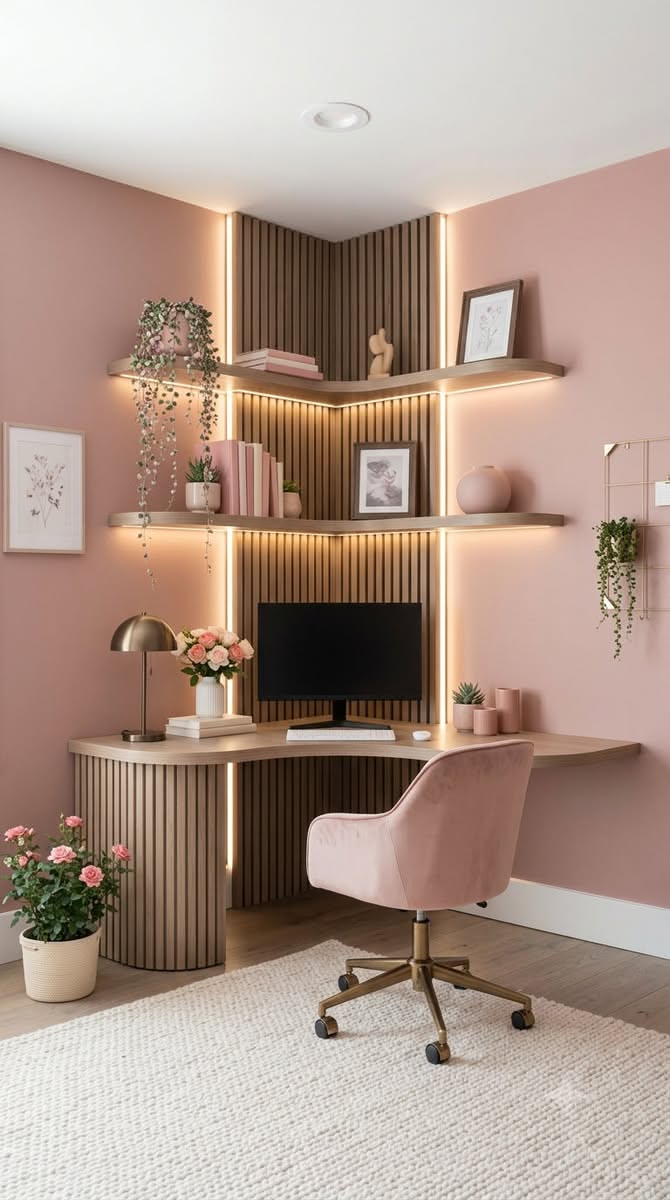
10. Float an L-Shaped Corner Desk
Corners are wasted in most rooms. A curved floating desk follows the walls here, with a slat wall and warm lights.
It uses both walls and leaves the floor open for a chair. Mount it into studs with heavy-duty brackets and keep the top at 29 to 30 inches high.
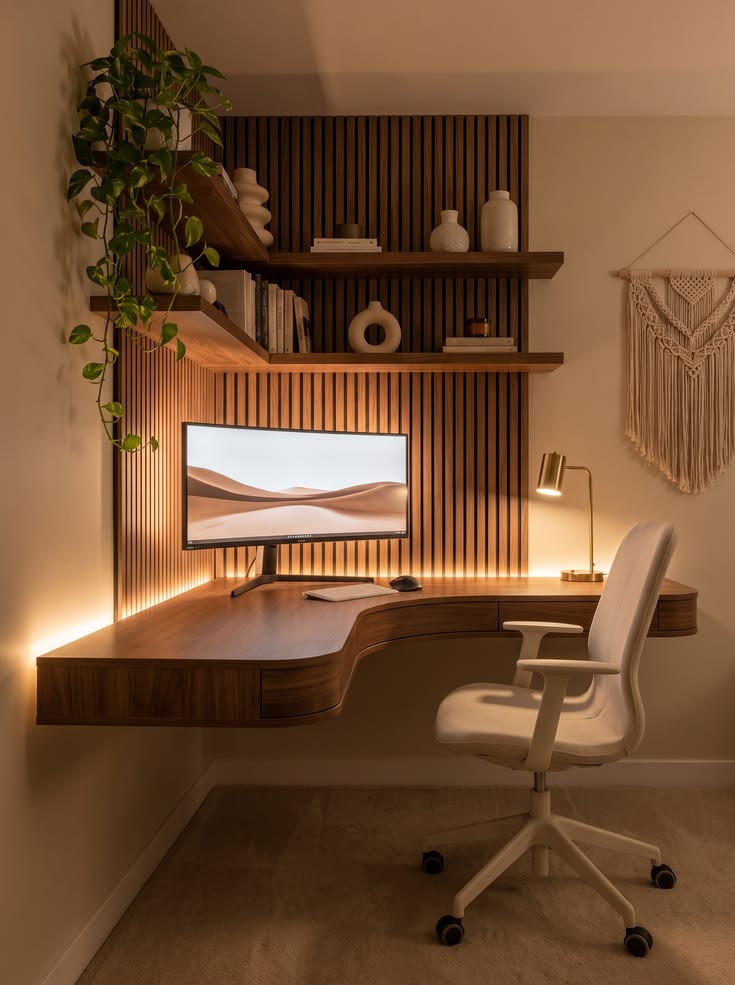
11. Use a Shelf Desk in a Tiny Nook
A tiny nook can hold a real desk.
A floating corner desk with three oak shelves above it fits this nook.
A 36 by 18 inch shelf desk fits a laptop and notebook with no legs to bump.
Space the shelves about 14 inches apart and keep the top one for light objects.
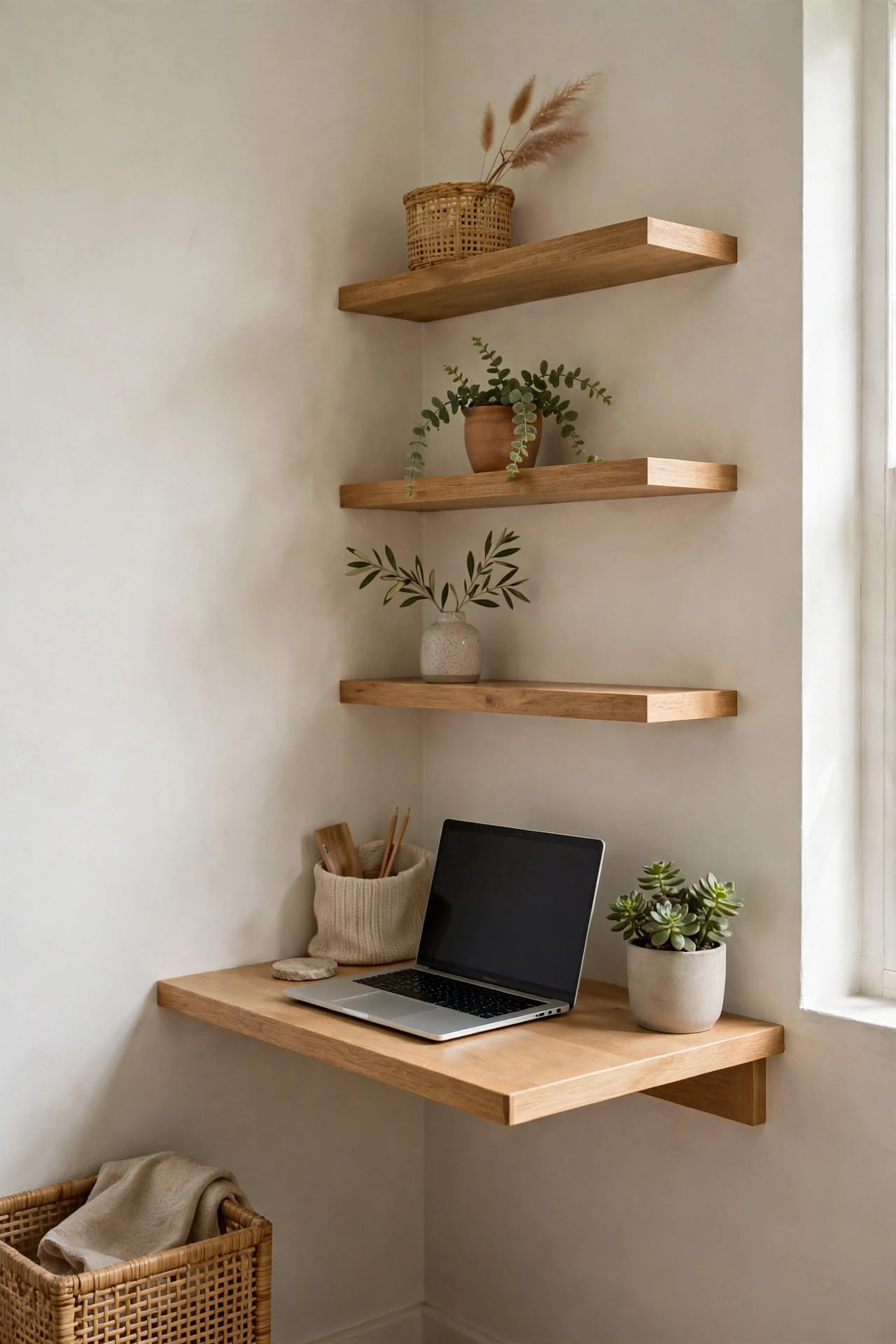
12. Pin Notes on a Board by the Window
A pinboard keeps notes off the desk. A wood desk by a window has a pinboard and a dome lamp.
Cork or linen-covered boards in a neutral tone look polished next to wood.
Put the lamp on the far corner so light falls on your work, not your screen.
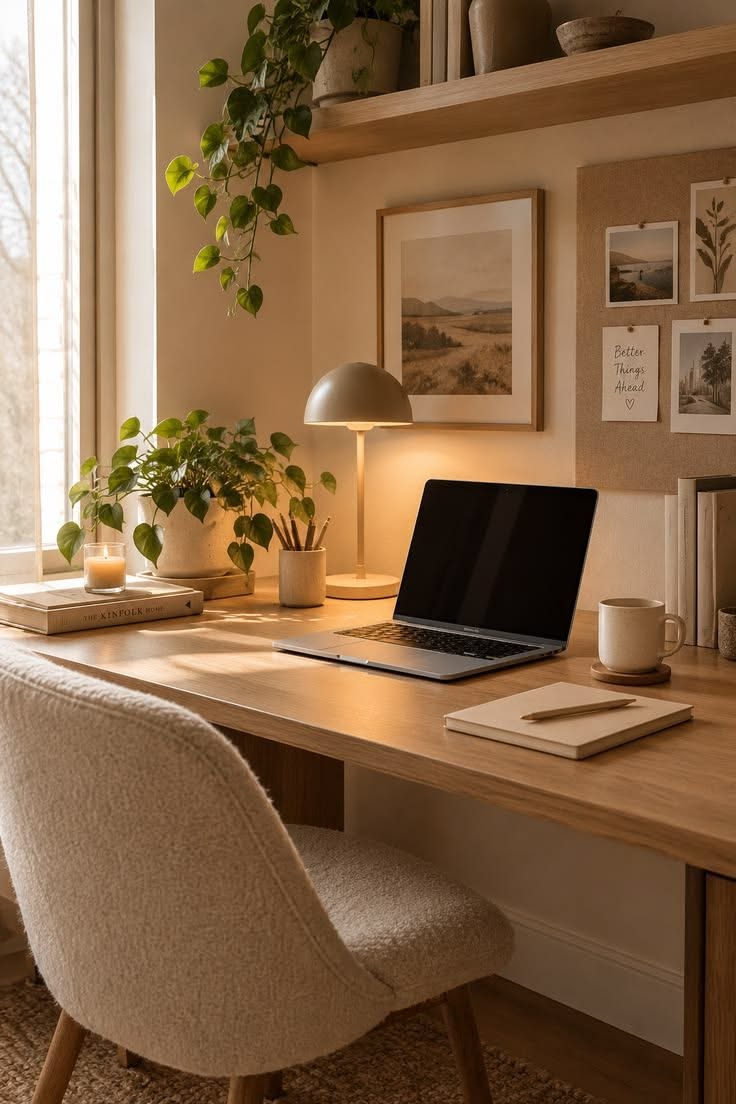
13. Mark the Work Zone in a Bedroom
A bedroom desk needs a boundary so work does not follow you to bed.
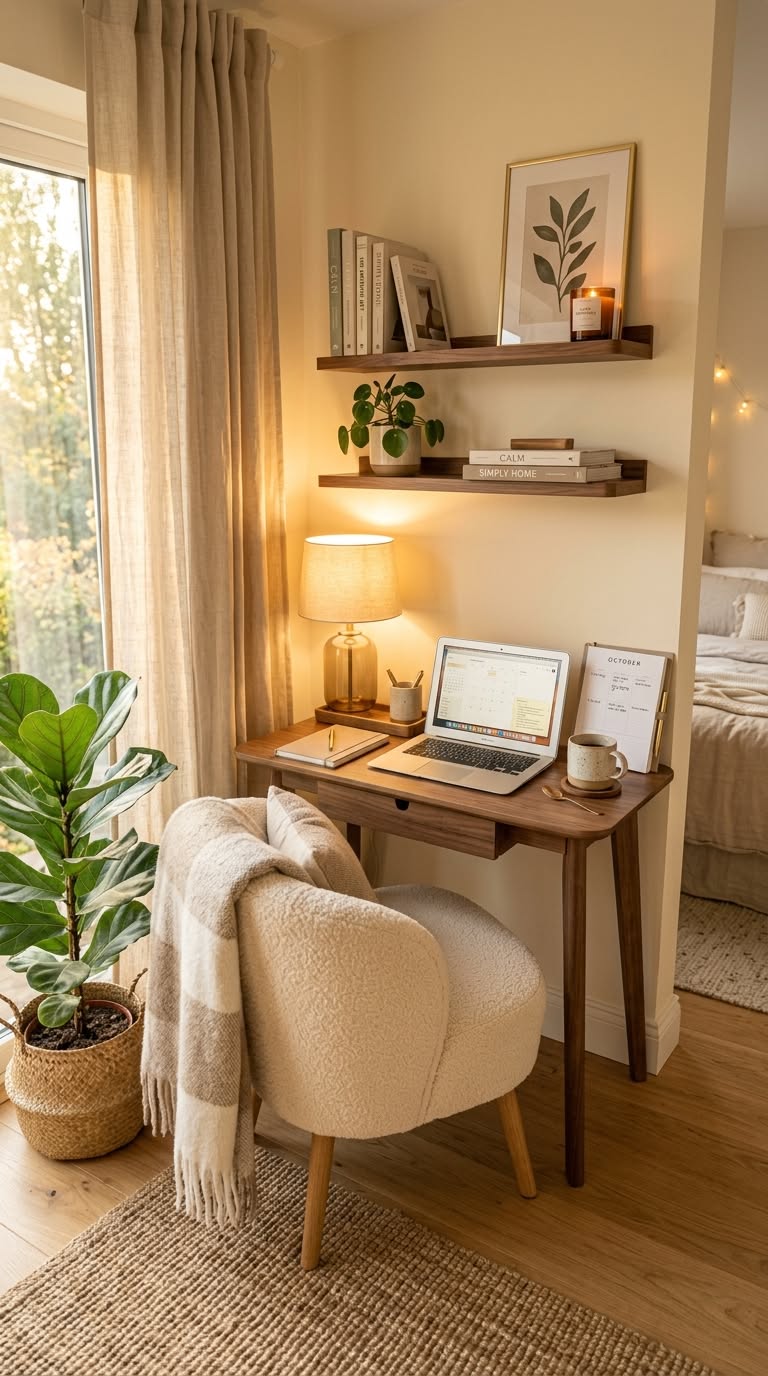
A slim wooden desk with a boucle chair fills this bedroom corner.
- A rug under the chair and a tall plant mark the zone.
- Choose a desk with a drawer so papers go out of sight at the end of the day.
14. Keep Light Wood Airy with Floating Shelves
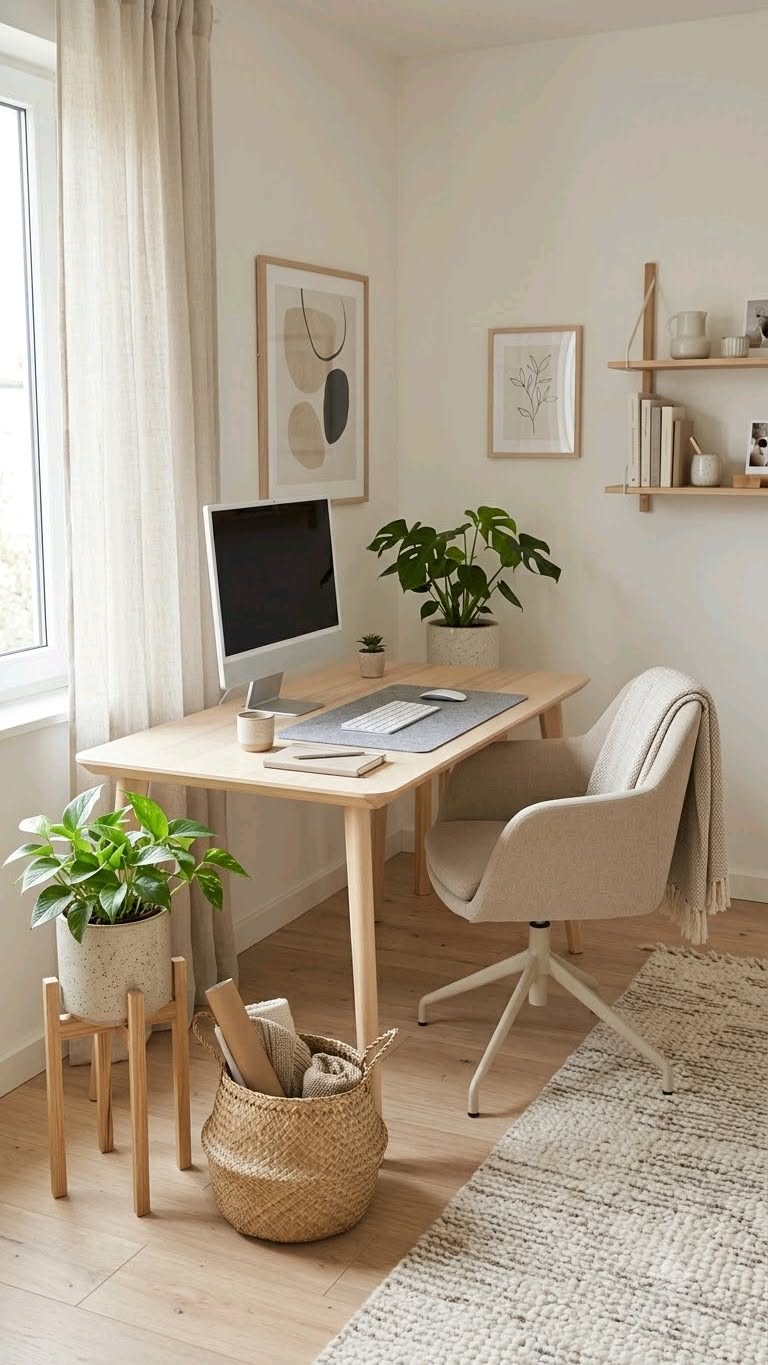
Light wood and white walls keep a small room open.
A light wood desk with a monitor and floating shelves fills this room.
Wall-mounted shelves free the floor around the desk. A basket under the desk holds cables and chargers so nothing trails across the floor.
15. Mount a Walnut Shelf Desk
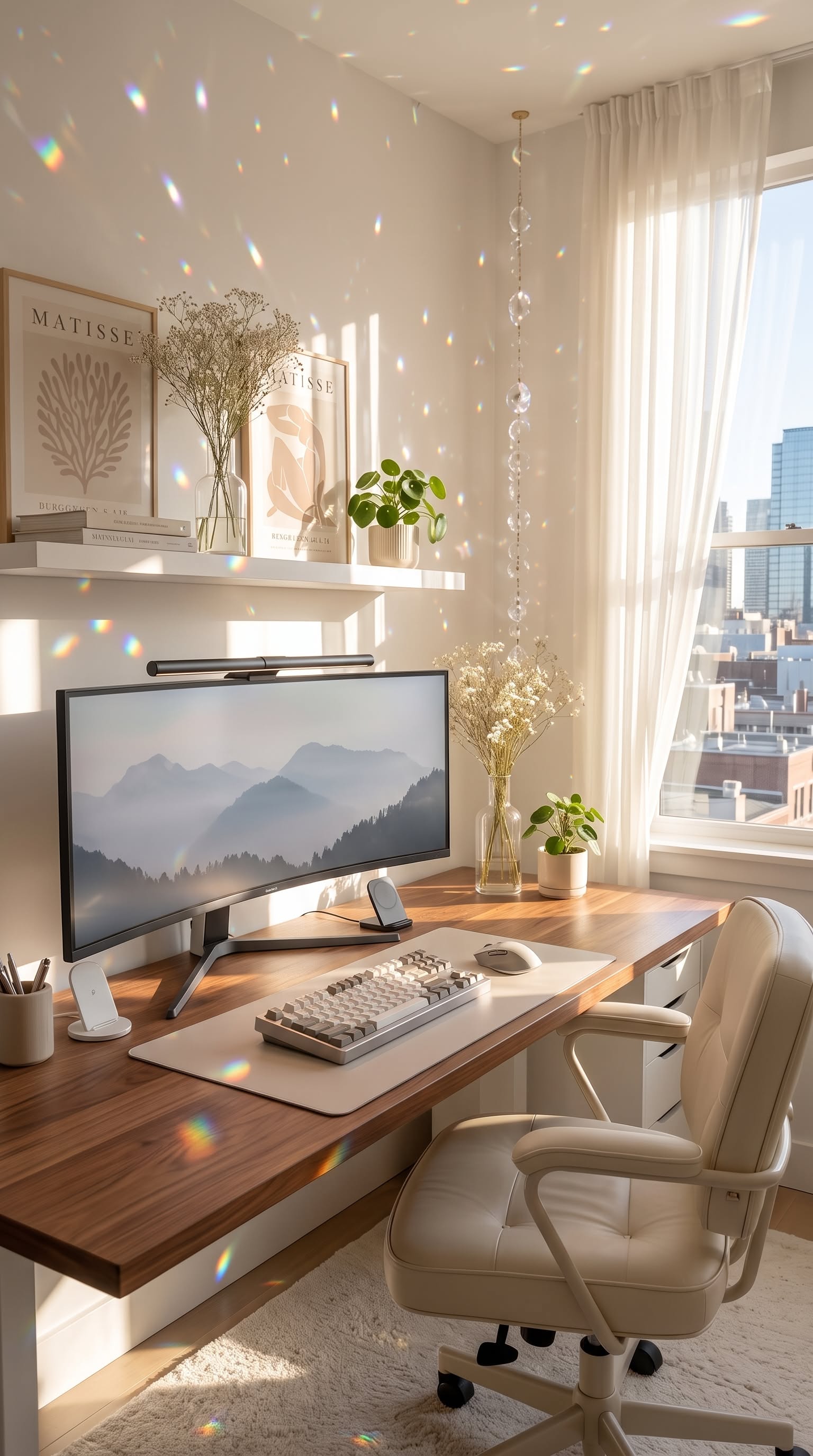
A wall-mounted desk about 20 inches deep fits a monitor.
A walnut floating desk with a monitor sits beside a sunny window.
Quick tip: Walnut looks richer than laminate and hides scratches.
Clip a monitor light bar on top to save desk space and light the keyboard without a lamp.
16. Turn a Hallway Alcove into an Office
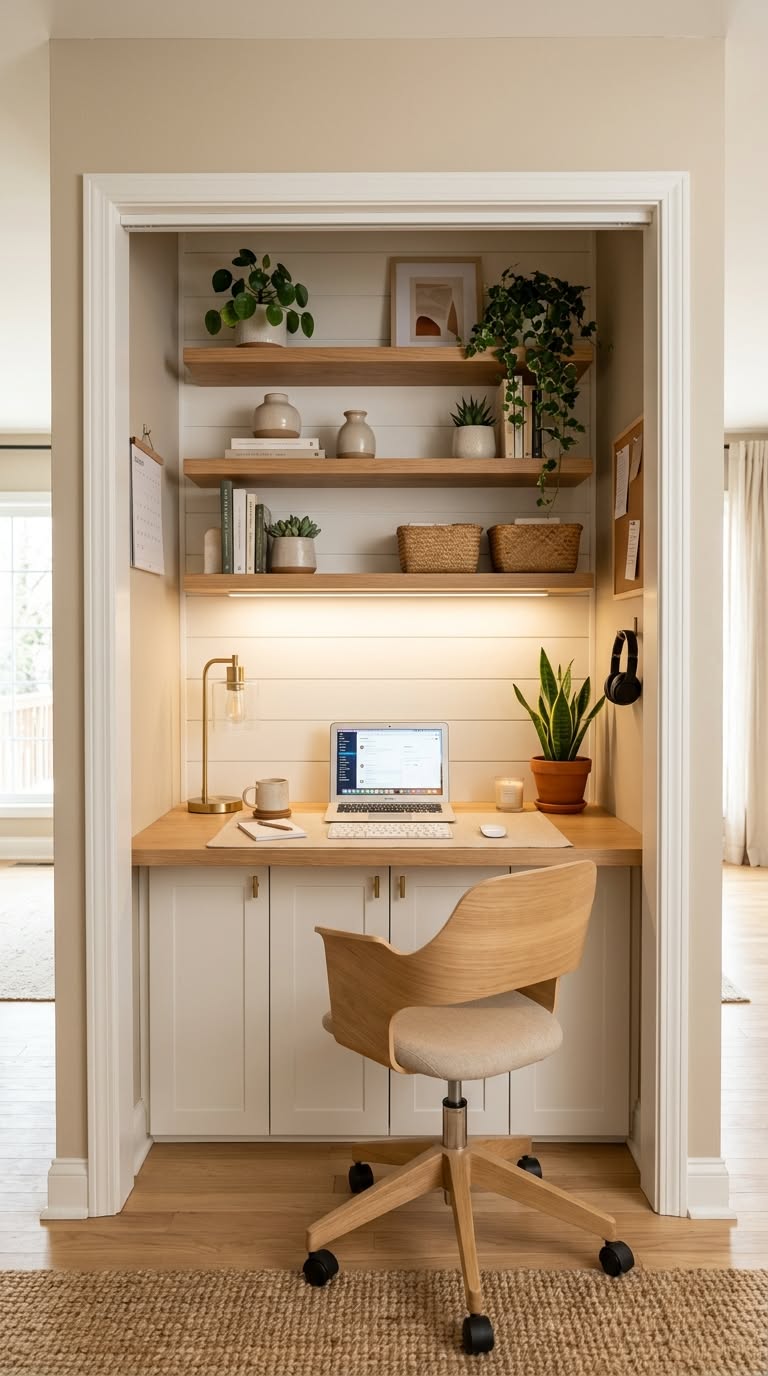
Look for dead space such as a wide hallway or a niche. Shiplap, shelves and a wood chair fill this hallway alcove.
An alcove only needs 36 inches of width for a desk.
Install a plug-in strip with a USB port inside so you do not run cords across the floor.
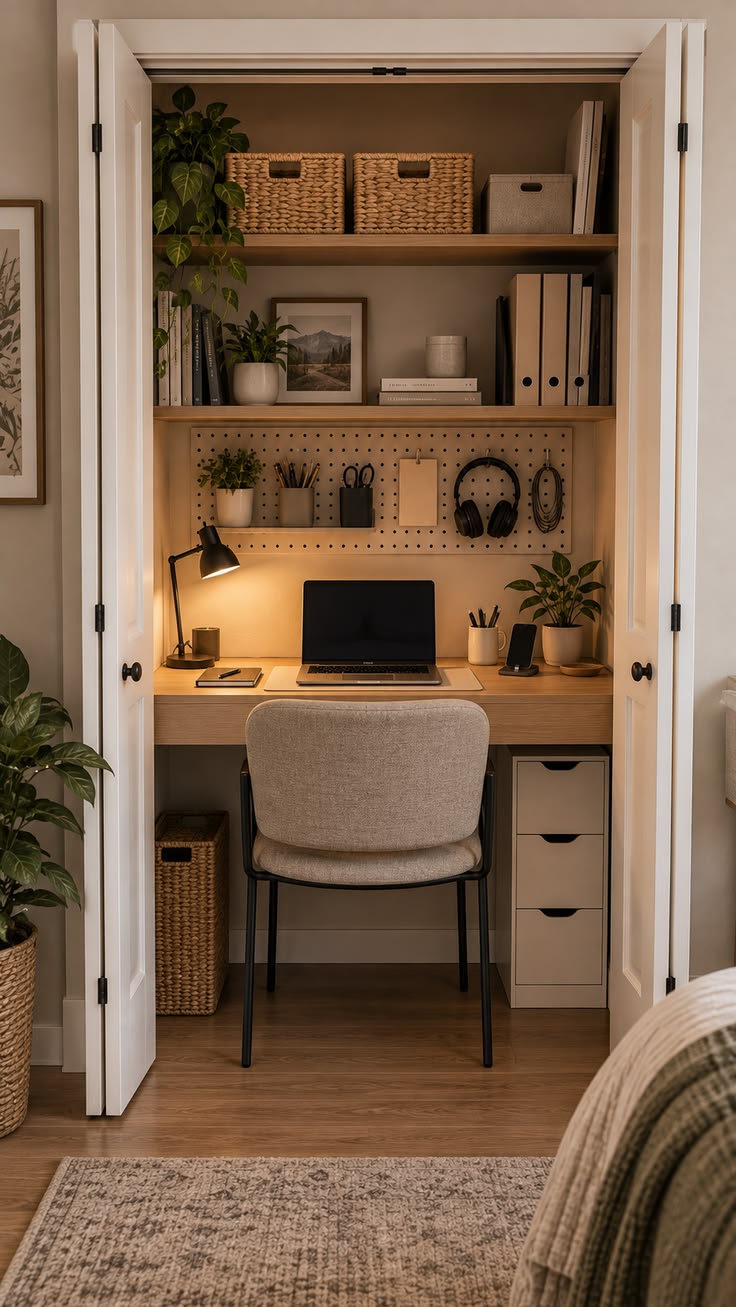
17. Convert a Closet with a Pegboard
A closet works because you can shut the doors on a messy day.
A pegboard, baskets and a wood desktop fill this closet office. Remove the rod, cut a shelf at 29 inches for the desktop and add a 15-inch shelf above it.
Drill a hole in the back for cables and add a battery puck light if there is no outlet.
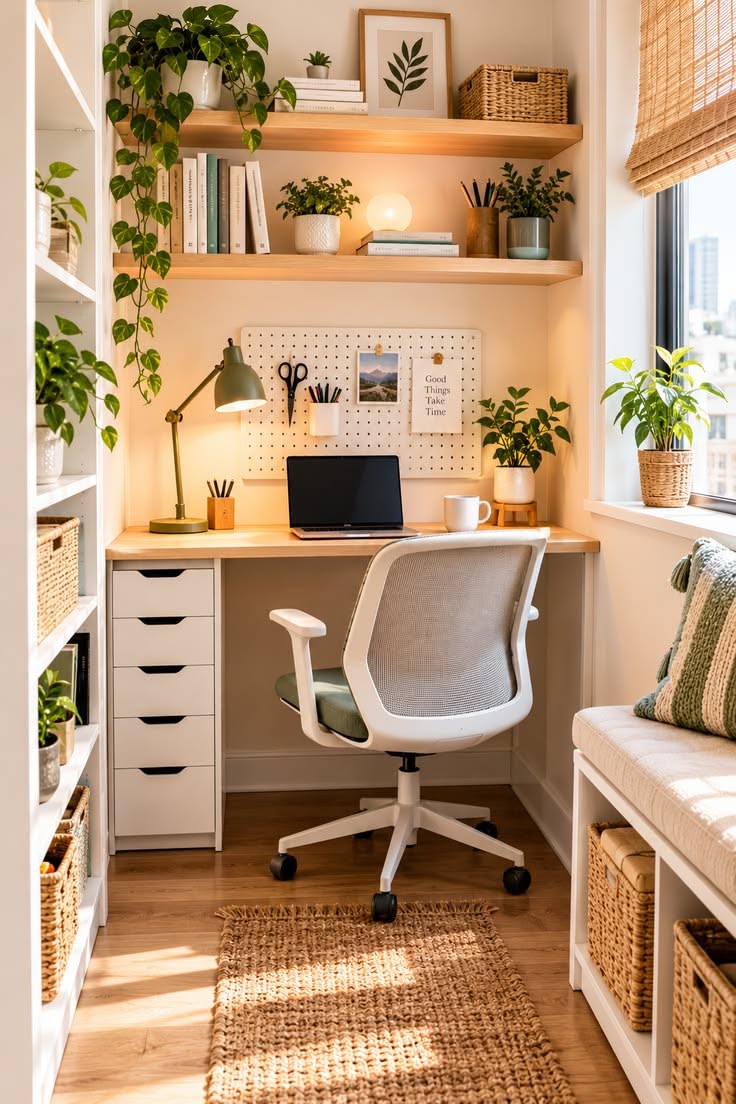
18. Build a Nook from Standard Units
Standard storage units can look custom.
A drawer unit, shelves and a window bench fill this corner nook.
- Use a white drawer cabinet as the desk base and add a cushioned bench for guests.
- Cover the wall above the desk with a pegboard for scissors, tape and earbuds.
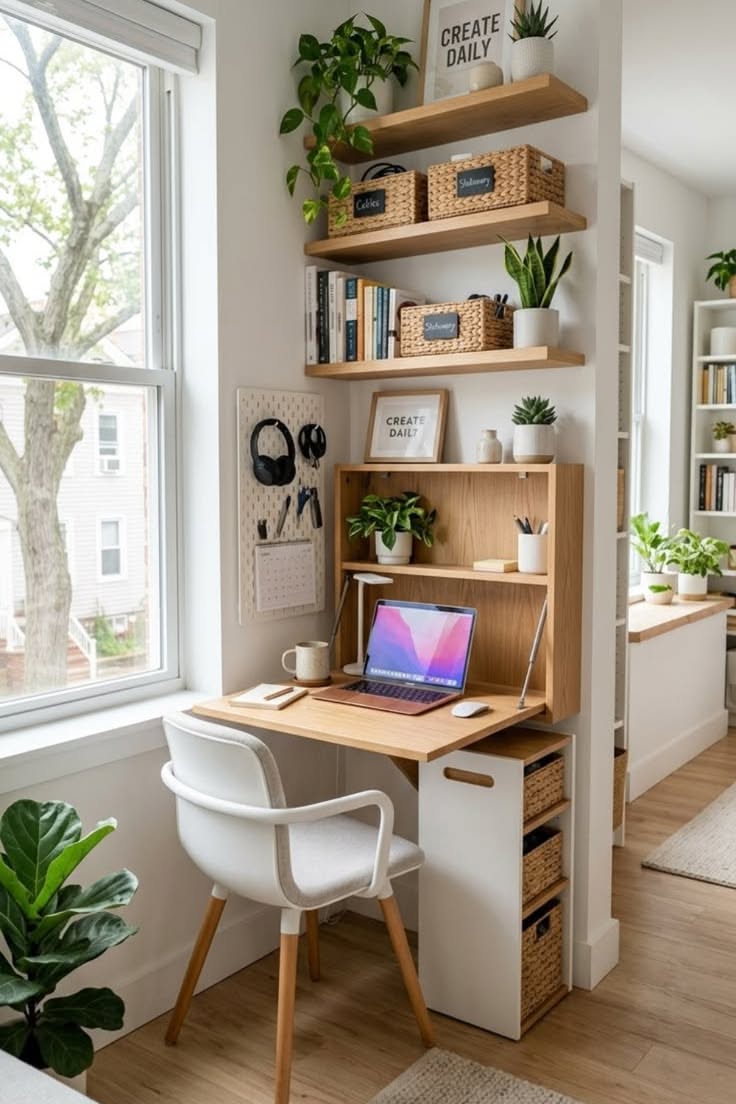
19. Hide the Office with a Fold-Down Desk
If the room has two jobs, use a desk that folds flat. A fold-down wall desk with baskets and open shelves fits this room.
- A drop-leaf desk gives 24 inches of depth for work and none when closed.
- Choose hardware rated for at least 50 pounds and mount into studs.
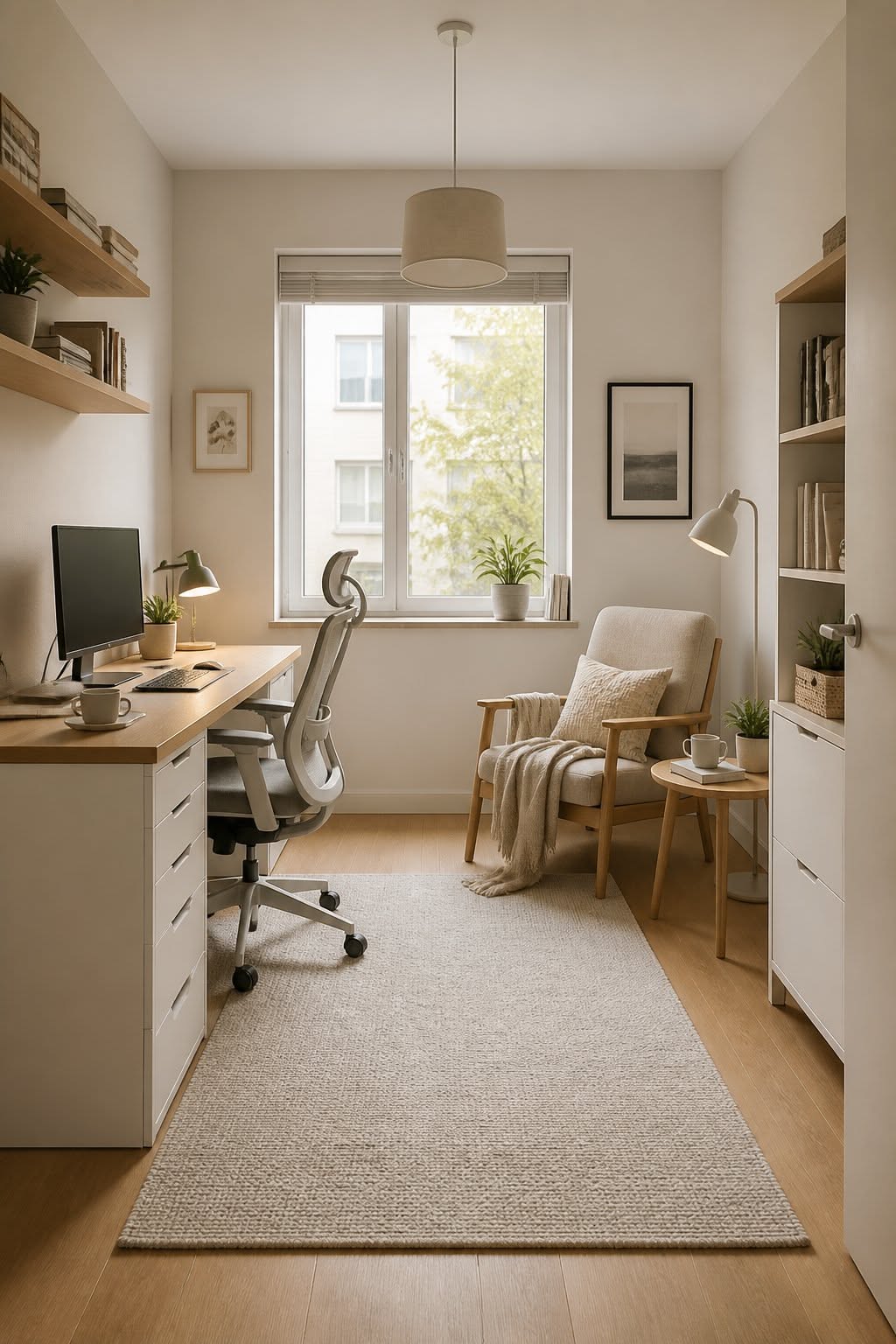
20. Run the Desk along One Wall of a Narrow Room
Narrow rooms work when you keep a clear 36-inch aisle. A long desk and an armchair by the window fill this narrow office.
Put the desk along one wall and the chair on the other side. A runner rug that follows the length of the room makes it feel wider.
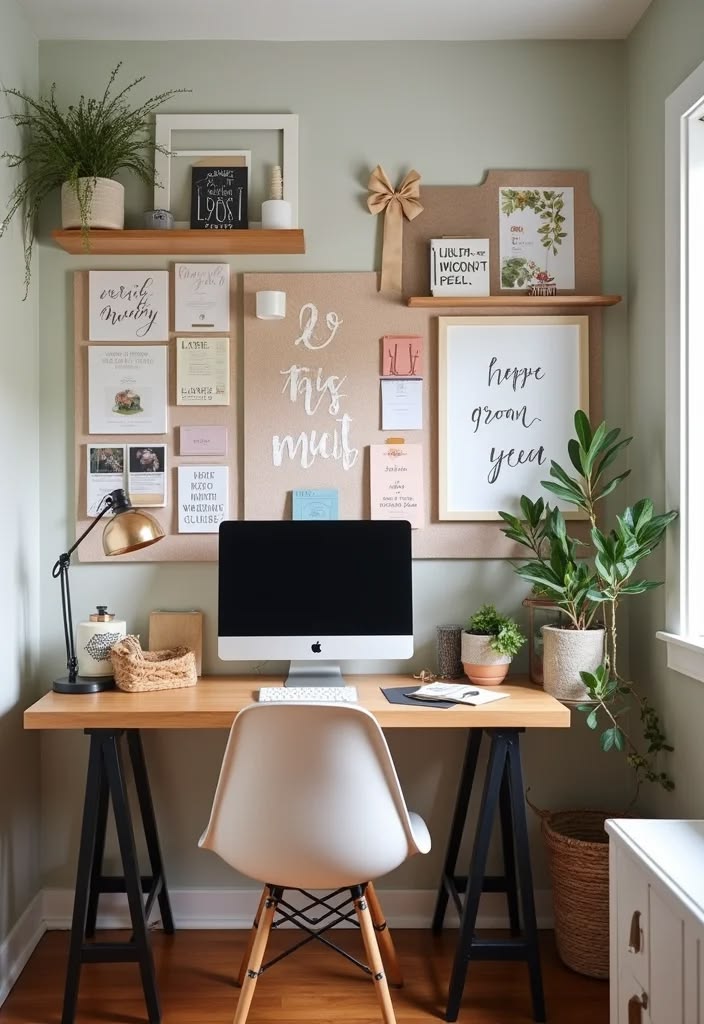
21. Build One Large Mood Board
One large board beats a dozen small notes.
A cork board and framed prints hang above this desk on a sage green wall.
A 3 by 4 foot cork panel with a few frames on top looks planned.
Keep the board to two or three colors and change the cards monthly.
22. Plan a Gallery Wall above the Desk
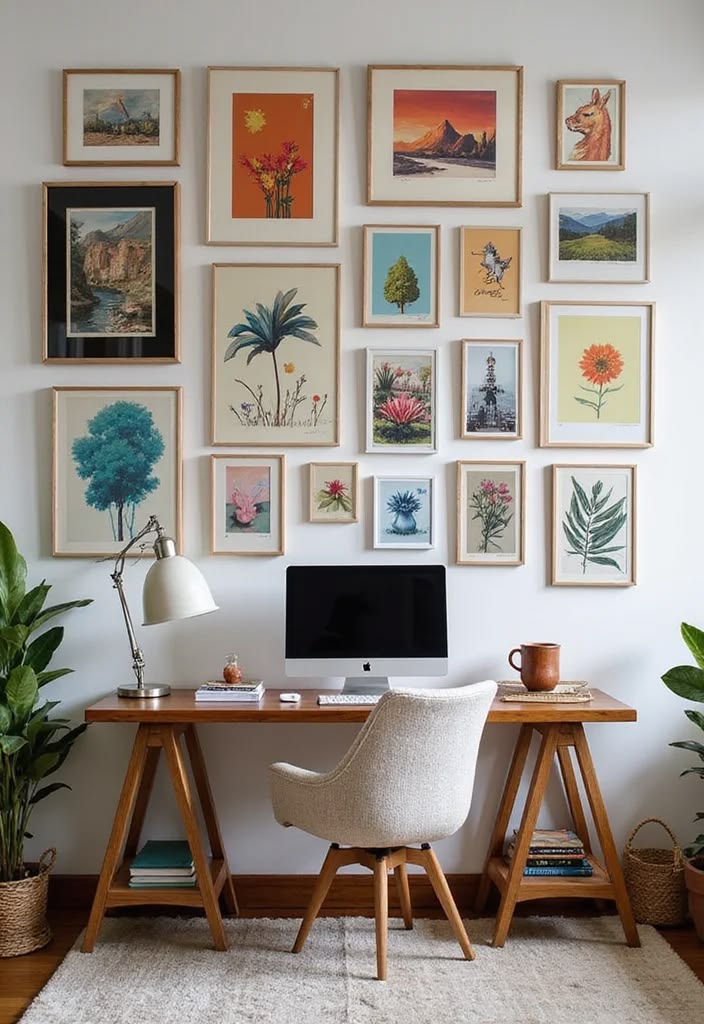
A gallery wall adds personality without taking floor space. Mixed art hangs above this trestle desk.
Lay the frames on the floor first, then trace paper templates on the wall.
Keep two inches between frames and make the group about two-thirds the width of the desk.
23. Clip Notes to a String
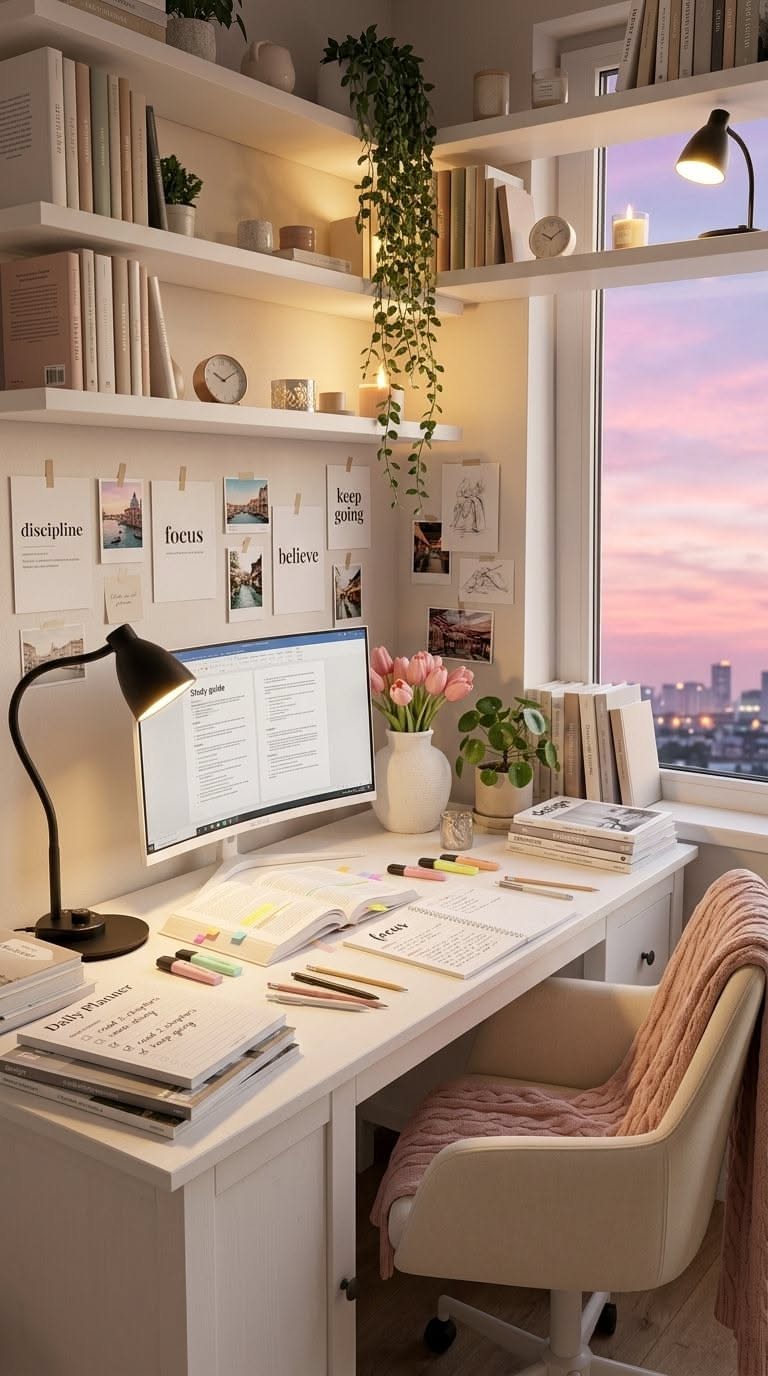
Students and freelancers both need a visible plan.
A white desk, a lamp, shelves and notes sit beside this window.
- Clip note cards to a string with mini clothespins instead of nailing up a board.
- Keep a planner open to the current week and put the rest on a shelf.
24. Split One Desk into Work and Vanity
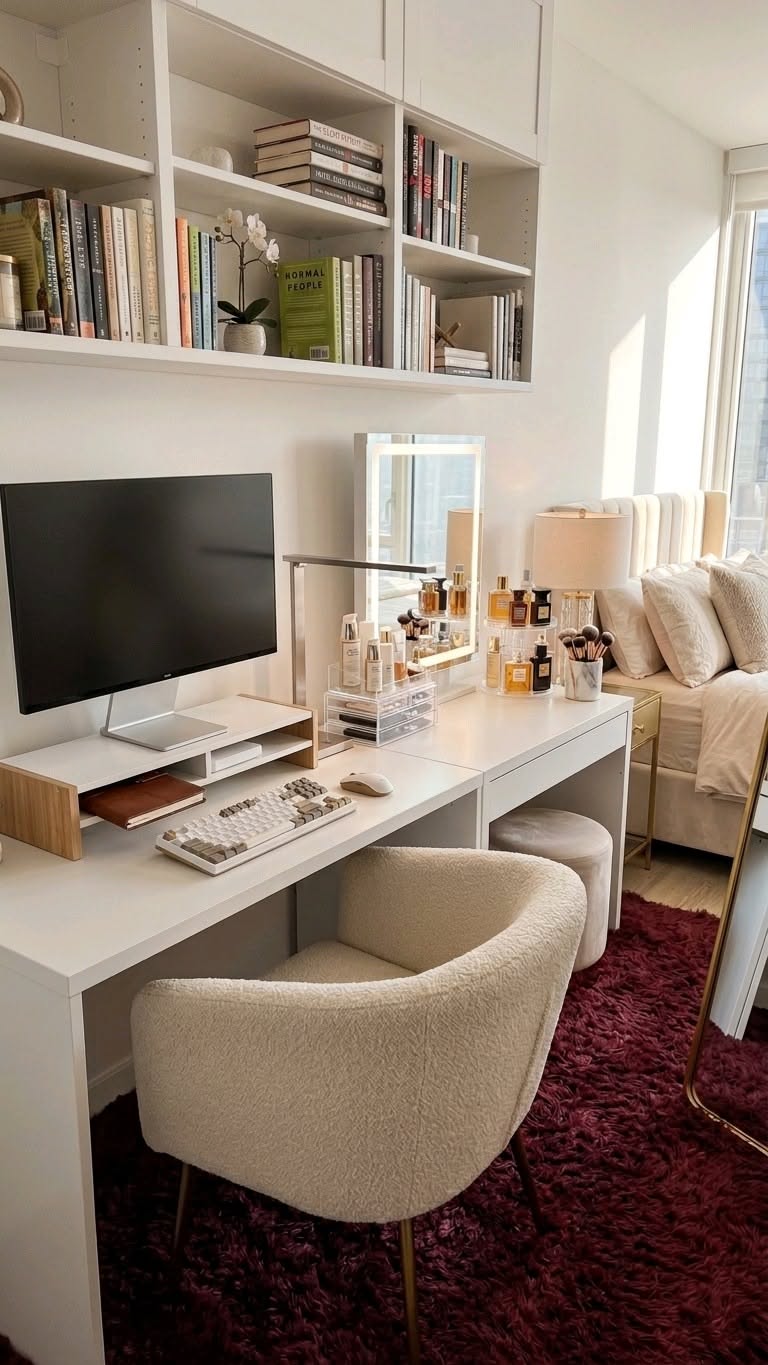
One long desk can serve work and getting ready.
A white desk here has a monitor on one side and a makeup mirror on the other.
Keep the two sides separate. Use a monitor riser with a drawer for chargers and a small tray for makeup so the surface stays tidy.
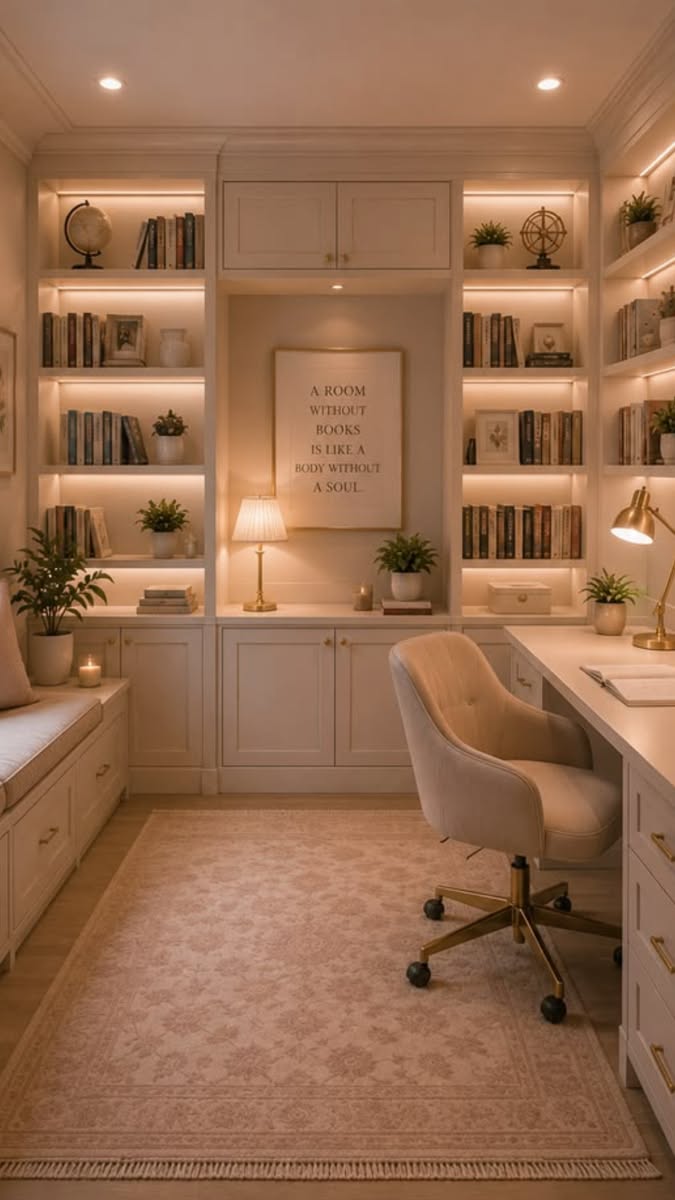
25. Paint Built-In Bookcases the Wall Color
Floor-to-ceiling shelves feel less heavy in the wall color.
Lit built-in bookcases and a window bench fill this office.
Quick tip: Add a cushioned bench at one end for reading.
Put the shelf lights on a timer.
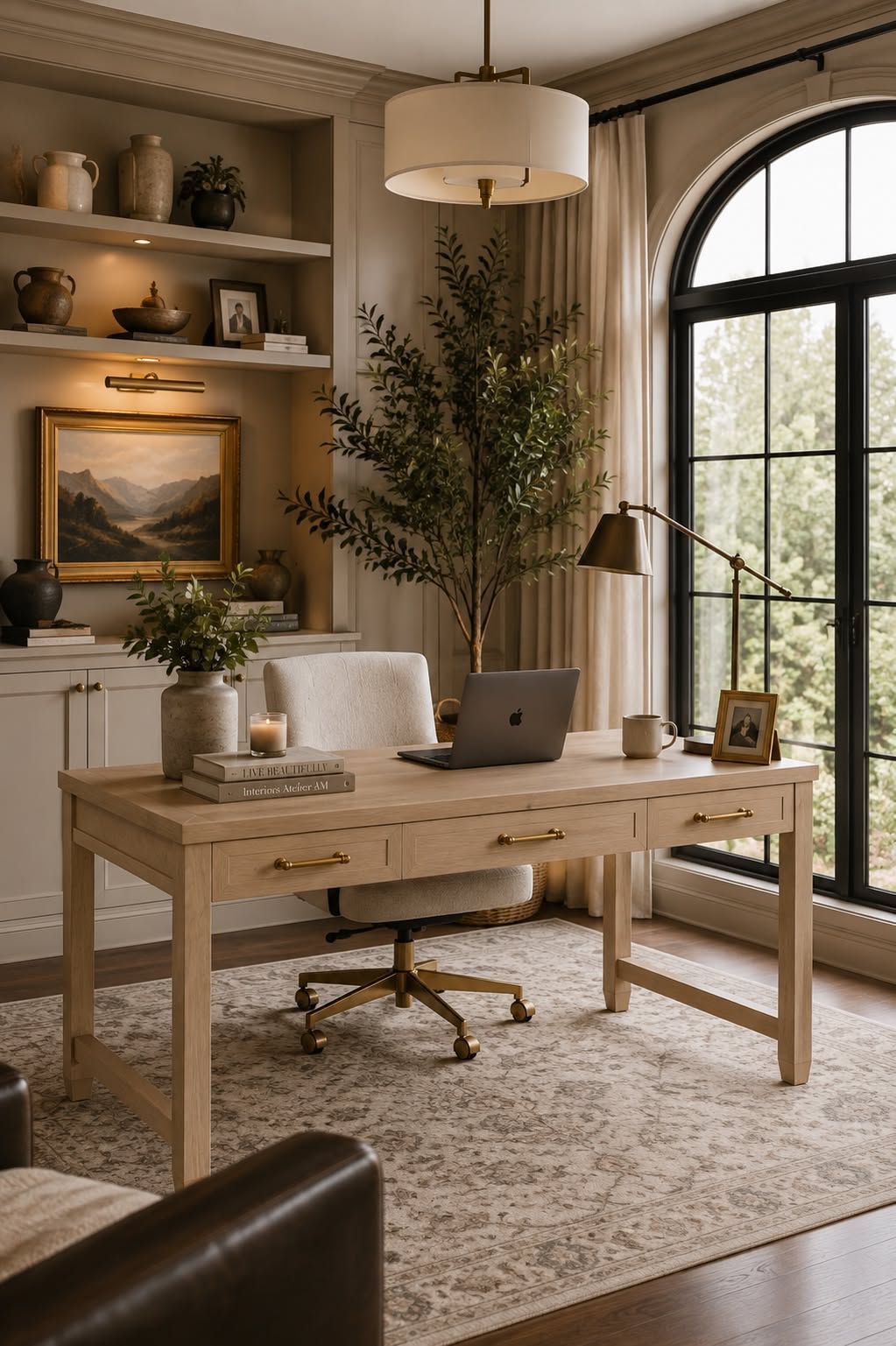
26. Swap in Brass Pulls
Brass pulls make a basic desk look custom. A light wood desk with brass pulls sits beside an olive tree.
Swapping hardware takes ten minutes and costs about $15.
A rug large enough to hold the chair legs makes the area feel designed.
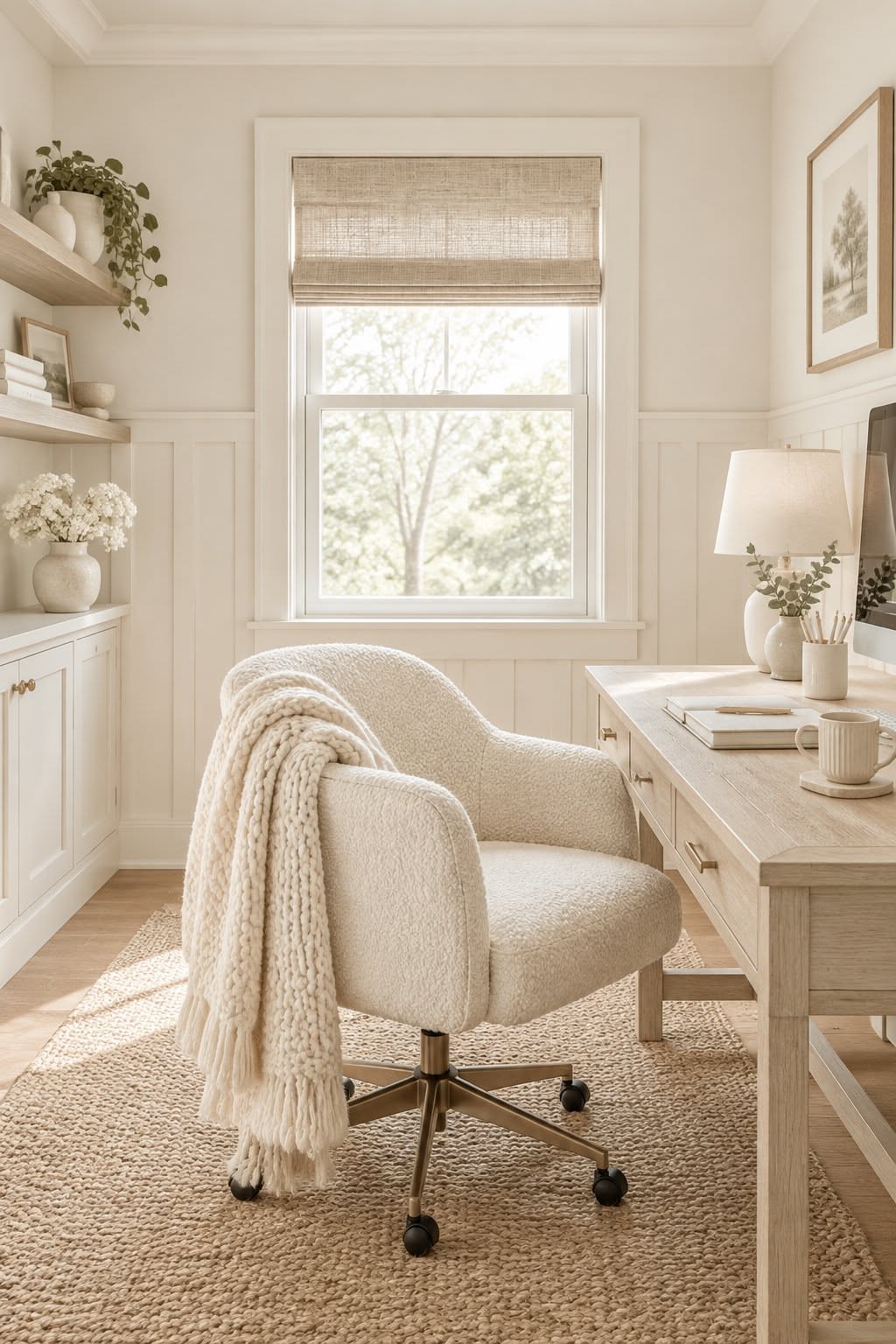
27. Build a Cream Office with Texture
An all-cream office gets interesting through texture.
A boucle chair and woven shade fill this cream room. Combine boucle, jute, linen and wood so the room has depth without color.
A woven roman shade softens daylight and cuts screen glare.
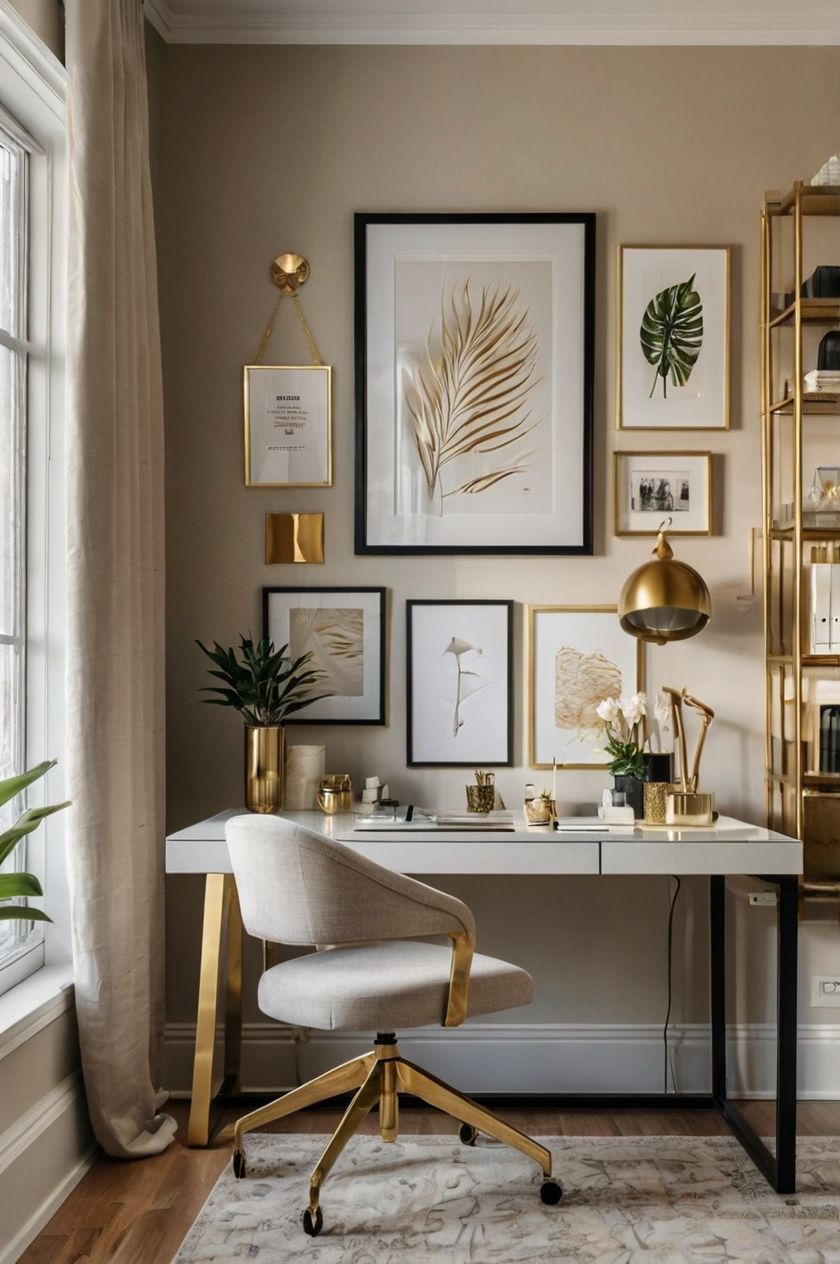
28. Limit Metal to One Gold Finish
Gold hardware and frames add shine to a small room.
A white desk, gold chair and gallery wall make this corner.
- Stick to one metal finish so it feels deliberate.
- Hang art at eye level when seated, about 40 inches from the floor to the center.
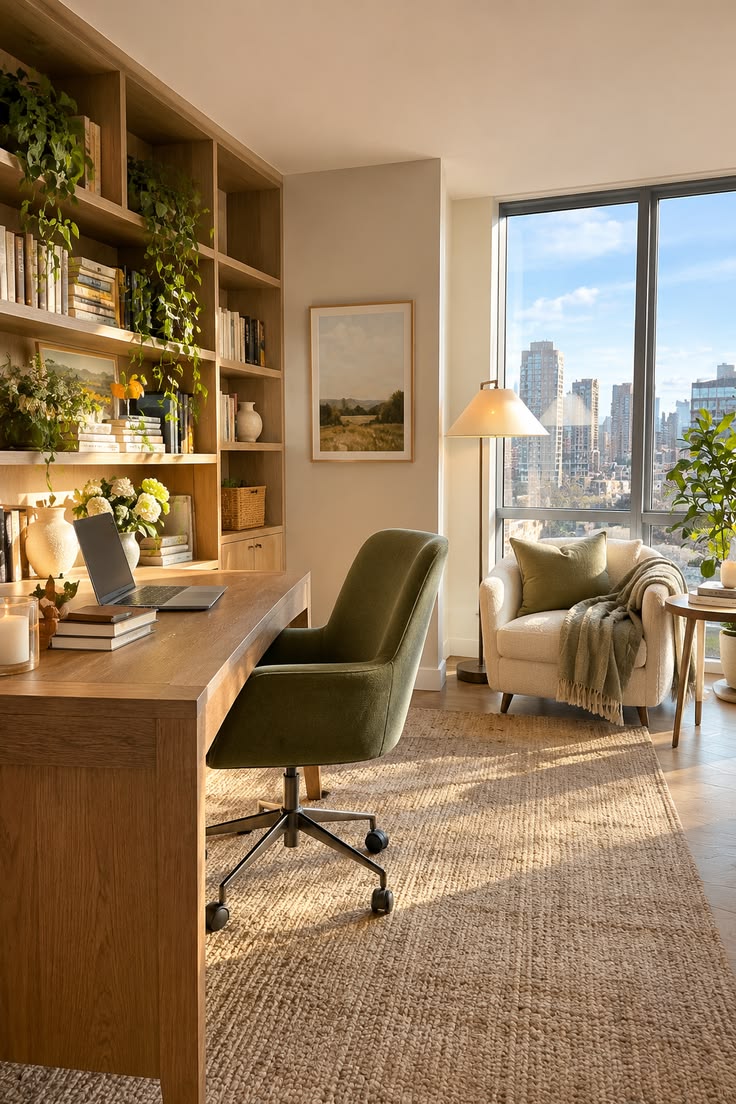
29. Pair Oak Shelving with an Olive Chair
A long shelf unit can replace a bookcase and a desk. A wood desk with built-in shelves and an olive green chair fill this room.
- Oak and olive feel warm together.
- Leave a few shelves partly empty so books do not dominate.
30. Give a Study an Antique Desk
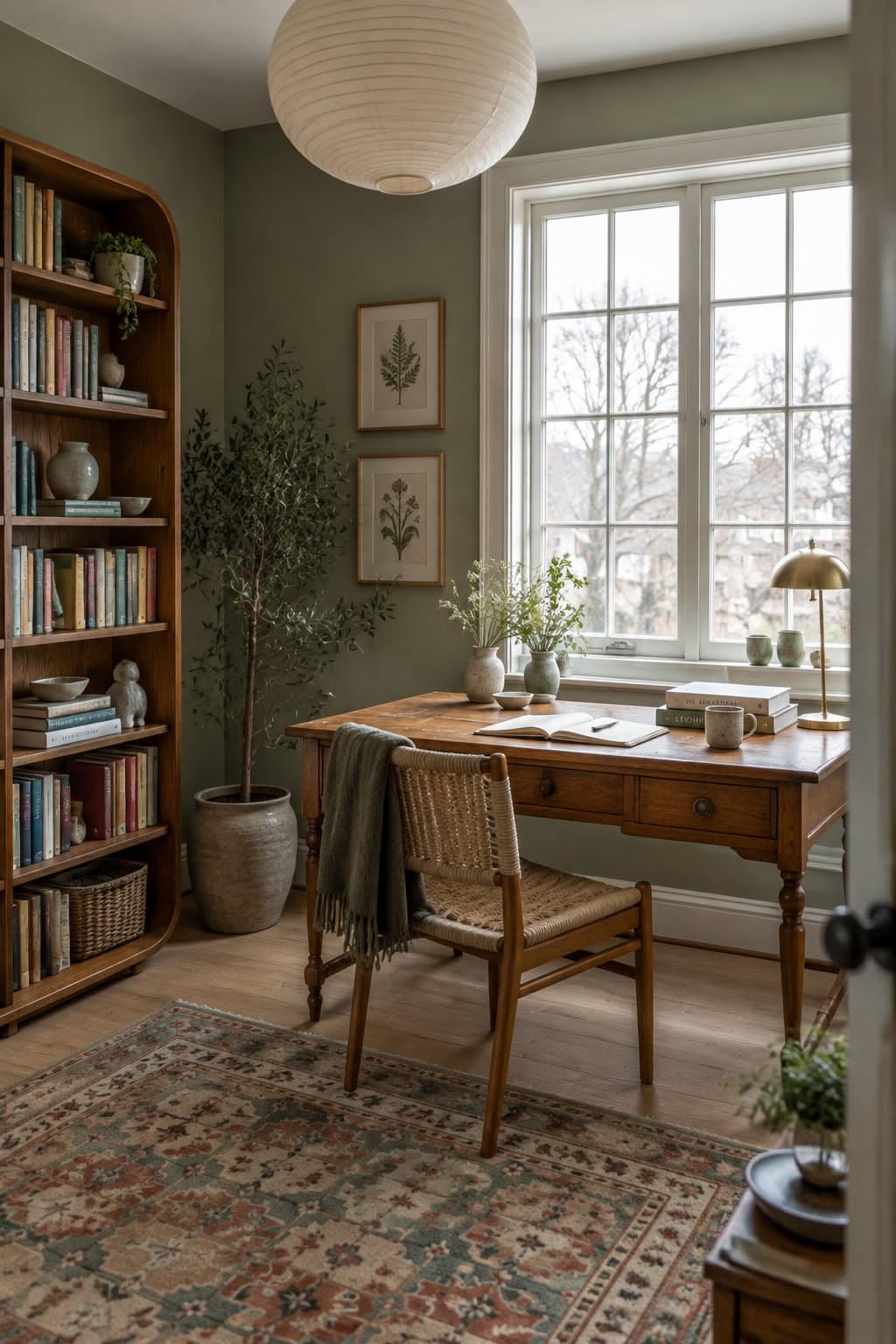
An antique desk gives a small office history. A sage green study here has a vintage desk and a patterned rug.
Look for one under 48 inches wide at a flea market or estate sale. A patterned rug and a woven chair soften the wood, and sage or olive paint ties it together.
31. Finish with Warm Built-In Lighting
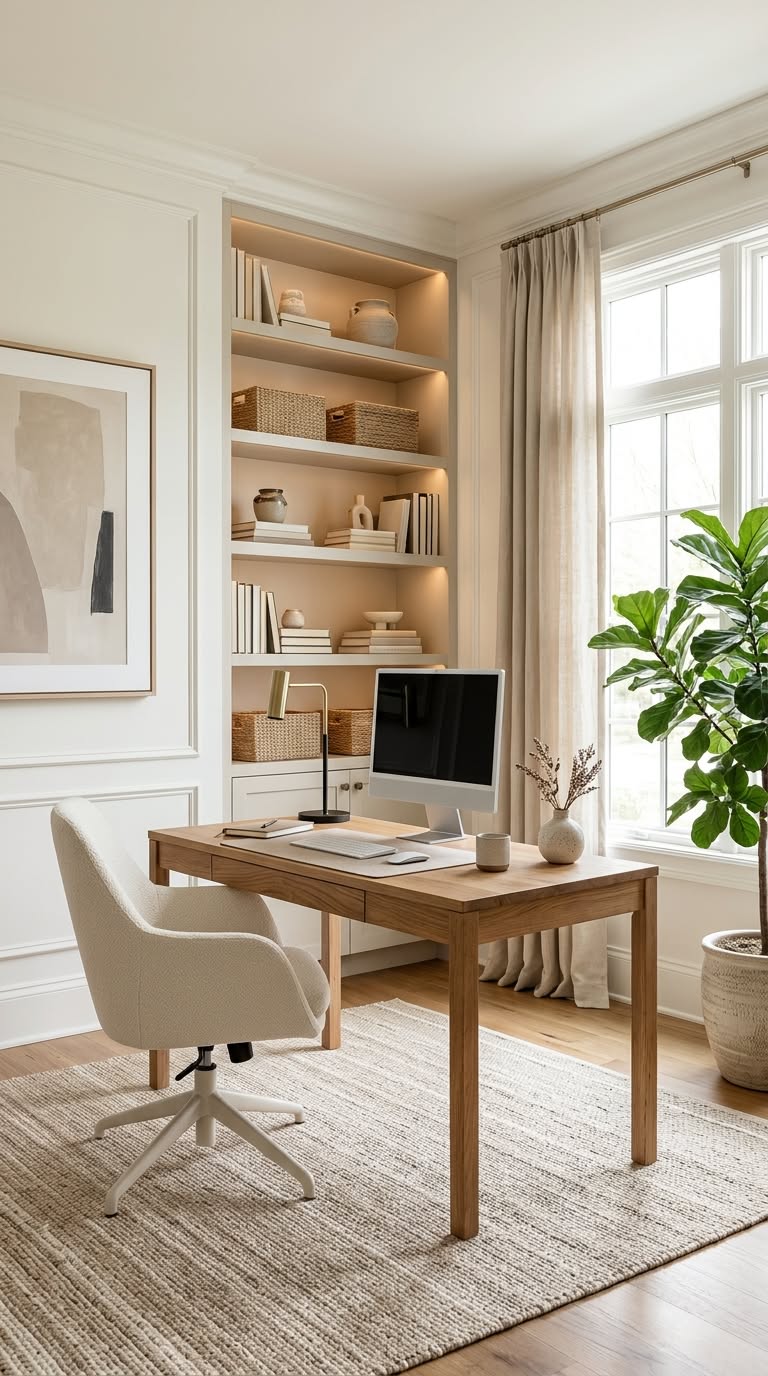
A built-in unit with warm lighting makes any room feel finished.
A cream office has a built-in shelf unit and a wood desk here.
Fill about two-thirds of the shelves and leave the rest empty.
Place the desk perpendicular to the window so the light falls on your side.
Common Small Office Mistakes (and Fixes)
Putting the desk where you face a wall. Turn it toward a window or into the room.
Using only overhead light. Add a task lamp and warm shelf lights.
Overfilling shelves. Leave a third empty so the wall breathes.
Mounting heavy shelves into drywall. Find studs or use rated anchors.
Start with the light and the chair, then add storage and one personal touch. A small office with those three things will feel better than a large one without them.